Can Battery Generators Provide Sufficient Power for Healthcare Facilities?
A question we often receive from our clients is:
“How long can the generator run?”
The short answer?
A battery-powered generator can operate indefinitely—as long as it’s configured correctly.
To ensure your backup system performs as needed, the first priority is confirming that it’s powerful enough to handle your equipment. Then, it’s a matter of integrating enough battery capacity to match your desired runtime—whether for compliance, regulatory standards, or your own peace of mind.
What’s the Typical Runtime for Battery Generators?
There’s no such thing as a “standard” runtime.
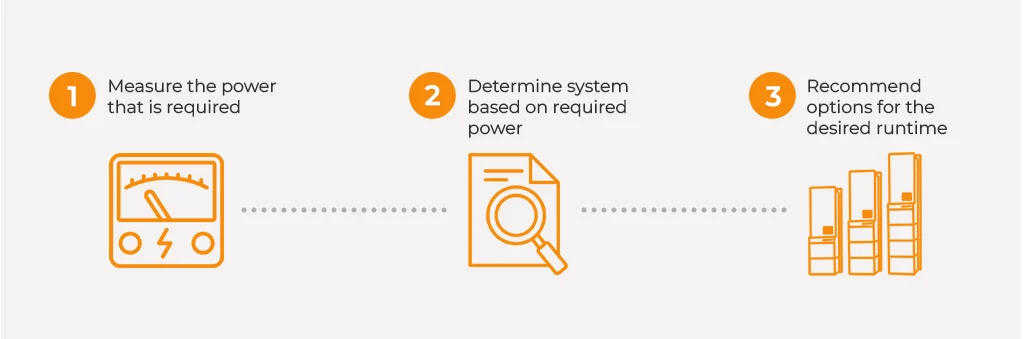
Every EverSafe system is built based on your specific requirements. We begin by calculating the total energy demand of your equipment. Next, we ask how long you need that equipment to remain powered. From there, we design a system that aligns perfectly with your needs.
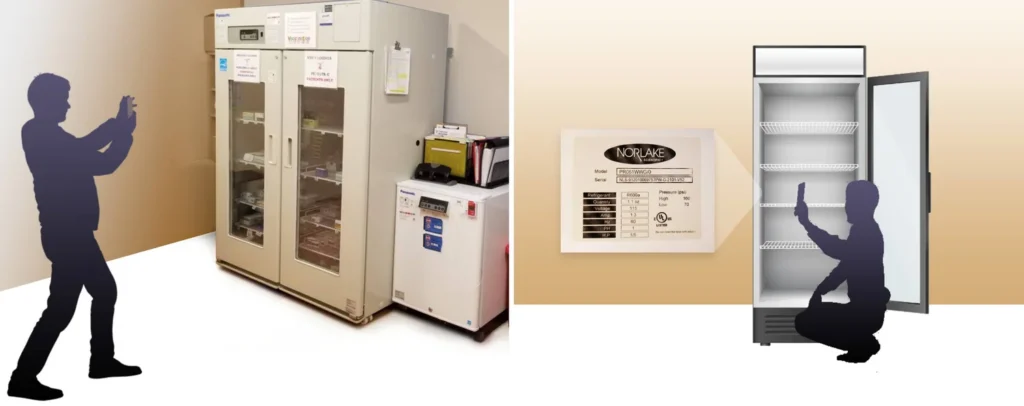
Why? Because runtime isn’t something you get—it’s something you define. Even two identical setups can have vastly different runtimes depending on the loads they’re supporting. So, you tell us what you need to power, and for how long.
The takeaway?
When treated as a design input, runtime helps us determine the optimal system for your environment.
What Are Common Indoor Generator Runtime Scenarios?
After decades of designing tailored systems, we’ve noticed some consistent trends. For instance, the runtime requirements for medical refrigeration systems differ from those of surgical equipment.
Medical Cold Storage Power Needs
Facilities relying on backup power for refrigeration typically want to maintain safe storage temperatures during extended outages. This helps reduce spoilage, protect critical inventory, and minimize disruptions while waiting for power restoration.
Common runtime targets include:
- Enough power to finish out the workday
- Coverage through overnight outages
- Full support during weekends or holidays when facilities are unattended
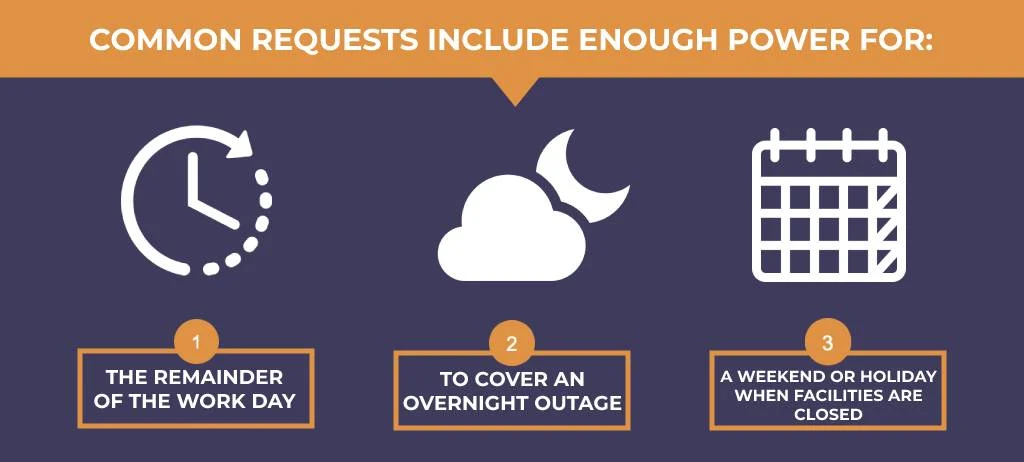
Backup systems designed for 12 to 48 hours of continuous runtime are quite common. These “all-day” configurations are used to protect sensitive materials such as vaccines, biologics, and high-value medications—ensuring they remain viable and safe. They also provide staff with enough time to relocate inventory if needed.
Backup Power for ASCs and Office-Based Surgery Facilities
Ambulatory Surgery Centers (ASCs) and Office-Based Surgery (OBS) practices have different needs. Backup systems in these environments are often governed by legal or accreditation mandates, which usually require between 2 to 4 hours of power.
This ensures that in the event of a power loss, ongoing procedures can be safely paused or completed, and patients can be properly transitioned.
Delivering Instant Backup Power for Critical Systems
Not every system needs to run for an entire day. Some battery backup units are built specifically for short-duration use—a crucial application in clinical settings.
These units are typically deployed in surgical centers or hospitals to bridge the gap immediately following an outage. Older diesel generators may take several minutes to come online—usually between 10 and 15 minutes.
In high-risk zones like operating rooms, this delay can be critical. Battery backup systems from EverSafe are engineered to supply instant power, keeping essential systems active until the primary generator takes over. They’re also designed to support compliance with accreditation standards, many of which require power to resume within seconds of a disruption.
Want to Know Pricing?
Every EverSafe system is custom-engineered to fit your exact power capacity and form-factor needs. To get the fastest estimate or quote, reach out directly:
- Phone: 1.800.765.3237
- Hours: Monday–Friday, 8:30 a.m. – 5:00 p.m. (EST)