When the power goes out, your elevators not being fully operational becomes a business issue long before it becomes a technical one. Tenants stuck upstairs, customers unable to reach you, staff hauling goods by stairs—every minute of downtime chips away at revenue, reputation, and safety. Traditionally, a diesel generator handled this risk. Today, battery-based backup offers a quieter, cleaner, and often simpler alternative for many buildings. The question isn’t “generator or batteries?” It’s “what gets me reliable elevator service with the least friction and best total cost?”
What “compliance” actually means (without the code soup)
Building rules require elevators to operate in specific ways during an outage (recall to a safe floor, firefighter access, emergency lighting/communications). They don’t insist on a particular power source. If your building must provide standby power, you can meet that requirement with batteries—provided the system is designed and documented correctly. The upshot for you: you have options, and your authority having jurisdiction (AHJ) will usually evaluate results, not brand names.
Why businesses are choosing batteries for their elevators
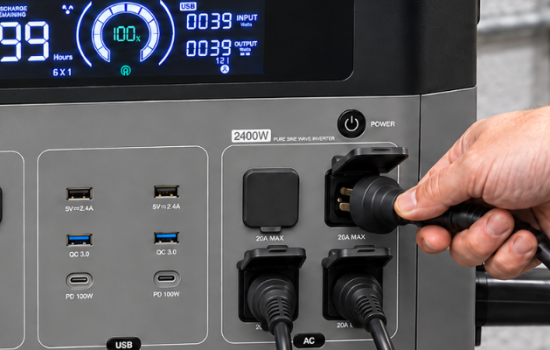
A modern battery system starts instantly, runs quietly, and lives indoors. There’s no fuel to store, no exhaust stack, and far fewer moving parts to maintain. For most mid-rise buildings, the practical requirement during an outage is one elevator at a time for safe egress and essential service. That’s a sweet spot for batteries: high reliability, right-sized capacity, and predictable upkeep.
Owners also like how batteries de-risk logistics. After storms, diesel deliveries are uncertain; batteries aren’t waiting on a truck. They also reduce permitting friction—often no air permits, no fuel containment, and less structural work.
Cost and ROI in plain terms
A generator’s sticker price can look competitive—until you add the carrying costs: fuel polishing, regular load testing, engine service contracts, emissions compliance, and noise abatement. Batteries flip that profile: typically higher electrical equipment cost up front, but lower and more predictable operating expense. Many projects land at comparable 5–10 year total cost of ownership, and some do better—especially where indoor installs, noise limits, or permitting push generator costs up.
A straightforward way to evaluate: model two scenarios—running a single car for emergency service and firefighter access versus trying to power everything at once. The first scenario is where battery systems usually win on TCO without compromising safety or compliance.
What you should ask your team (or vendor)
Skip the deep electrical theory and focus on deliverables that matter to your operation:
- Uptime promise: What level of elevator service do we get during an outage—and for how long—under realistic loading?
- Transfer behavior: Is the changeover automatic and smooth (no “stuck in the shaft” moments or nuisance trips)?
- Maintenance plan: What are the recurring tasks, who does them, and how disruptive are they?
- Space & installation: Where will it go, what does it weigh, and does it require ventilation or special construction?
- Monitoring: Will facilities see state-of-charge and remaining runtime in real time, with alerts before it becomes a problem?
- AHJ package: Is there a clean, one-page code narrative and a test script that local inspectors accept?
If those answers are crisp, you’re looking at a solution that protects your people and your P&L.
What changes on outage day
With a properly sized battery system, the elevator remains available for controlled, prioritized service: recall, firefighter access, critical trips for tenants with mobility needs, essential goods movement. Staff see live runtime estimates and can ration service intelligently. Noise complaints and fuel scramble calls aren’t part of your playbook.
When a generator still makes sense
Some buildings truly require multiple cars running simultaneously for extended periods, or they already maintain a generator for other life-safety loads. In those cases, a generator can still be the right business decision. Many owners pair a smaller generator with batteries to smooth peaks and reduce engine size, noise, and cost.
The business case for battery backup for elevators
Keep your elevators running
Battery backup for elevators turns a low-frequency, high-impact risk into a managed, predictable service. You get instant start, indoor installation, lower operational friction, and competitive total cost- while meeting the same safety outcomes your codes require. For many properties, that combination is better for tenants, better for operations, and better for the balance sheet.
Call EverSafe at 1.800.765.3237 or fill out a contact form below to speak with one of our emergency backup power experts today.