Do You Need a Fuel Powered Generator or a Battery Powered Generator?
The following points below may help you define if your emergency backup power needs may be suited to a Fuel Powered Generator or a Battery Powered Generator.
Purchase Price
The costs of a generator varies with the size of the load it is supporting. Generally a generator that uses some type of fuel for its energy source is more economical when it is supporting for extended run-times. However if your load is small enough or the backup support time is short, a battery backup is often an easier and cheaper option.
Noise:
A generator that is 100% powered by batteries is either noiseless or makes very little noise. In contract a gas powered generator has a combustion engine, (especially smaller portable generators with a small engine) are very noisy. Even some of the quietest fuel powered generators run at 70 decibels.
Runtime:
All equipment that uses batteries as its primary source of energy are limited to capacity of which they contain. In order to get extended run-times from battery powered generator the size of the battery bank has to increase, this can get costly. Fuel powered generators can run unlimited time as long as there is a fuel supply available.
Energy Source and Storage
Fuel powered generators run off a few different types of fuel: liquid propane, gasoline, natural gas are the common ones, larger generators run on diesel. These fuel lines may require plumbing to be installed in the building. If there is natural gas supply available in your area, it may be the more economical to utilize it, rather than storing fuel on your property which can get complicated and costly.
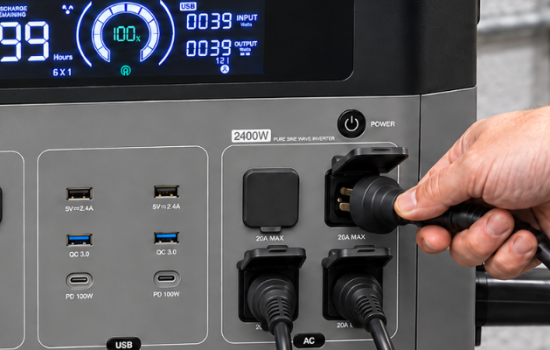
Battery powered generators can get quite heavy and take up indoor space. The batteries also need replacing every 4-5 years. Eversafe design helps conserve space while at the same time delivering ample power for extended runtimes.
Pollutions and Exhausts:
Battery powered systems omit no exhaust fumes and very little heat.
Exhaust fumes from a fuel powered generator when it is being housed in an enclosure need venting.
Maintenance:
Fuel powered generators require regular tune-ups. Items that often need checked or replaced are: Spark plugs, engine oil, oil & fuel filters, belts, startup batteries need checked or replaced, stored fuel may need pumped out and replenished with fresh fuel and transfer switches need inspection.
Battery Powered generators need very little maintenance. A simple check of switching off the supply power to the system to check the power output and transfer. This test is all that is needed on a frequent basis. Battery replacements are usually required one every 4 years.
Installation Costs & Complications:
Installation cost for a fuel power generator set can be a lot of higher than anticipated. The fuel storage and supply plumbing are two of the items that keep these costs on the high side. If the site that needs power is in a high-rise building, wiring and supply line costs can be exuberant and sometimes impossible. Also the permits to install such equipment can be sometimes hindered by noise ordnance, environmental and zoning restrictions.
Being that battery powered generators are installed indoors, many of these restrictions and permitting problems are eliminated. Battery Powered units that are plug and play do not require any permits. When installing larger battery generators you may want to check that the structure that supports it, is strong enough to withhold the weight.