Millions of people across Canada and the Midwest and Eastern United States are seeing skies turn hazy as smoke from hundreds of wildfires raging in the Canadian provinces drifts. Air quality alerts stretch from Minnesota to New York, with some cities experiencing conditions reminiscent of the record-setting wildfire smoke events of 2023.
For most people, the primary concern is air quality. For utilities and organizations that rely on continuous electrical service, however, wildfires represent another, often overlooked challenge: hundreds of miles away from a fire’s origin, smoke can reduce grid reliability, complicate utility operations, and contribute to power interruptions.
As wildfire seasons become longer and more intense year after year, engineers and facility managers are beginning to recognize that the risk extends far beyond communities directly threatened by fire. Reliable backup power is becoming an increasingly important part of preparing for a changing electrical landscape.
Wildfires Don’t Have to Burn Equipment to Affect the Grid
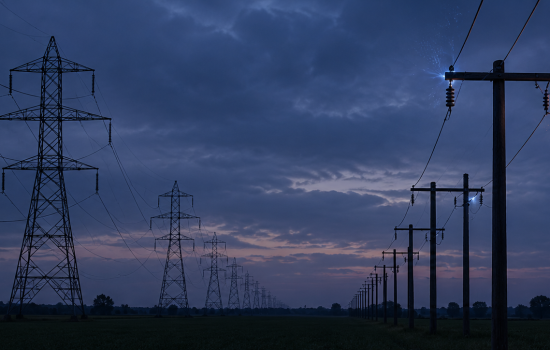
Wildfires can interrupt electrical service in several ways. Direct fire damage to transmission lines, substations, transformers, and utility poles remains a significant concern in fire-prone regions. Utilities may also intentionally disconnect portions of the grid when conditions create an elevated risk that electrical equipment could ignite or contribute to a wildfire.
Public Safety Power Shutoffs
These planned outages, commonly known as Public Safety Power Shutoffs (PSPS), may be implemented during periods of weather conditions contributing to higher fire risk, such as high winds, low humidity, even when no active fire has reached utility infrastructure. Because power can remain off until dangerous weather passes and crews inspect transmission equipment, a PSPS event may last several hours or extend across multiple days. Facilities may receive advance notice, but the timing, geographic scope, and duration can change as weather conditions develop. For organizations that depend on continuous power, the planned nature of the outage does not reduce its operational impact.
Smoke Contamination from Wildfires
Less obvious is the impact of wildfire smoke itself. Dense smoke contains fine particles, ash, and other contaminants that can settle on high-voltage transmission equipment and electrical insulators. When combined with moisture from fog, dew, or light rain, these deposits can create conductive paths across the surface of an insulator. This phenomenon, known as contamination flashover, can cause electrical faults and force protective equipment to disconnect portions of the grid to prevent more serious damage. Utilities in wildfire-prone regions have long recognized smoke contamination as an operational challenge, particularly during prolonged fire events. In addition, heavy smoke can reduce visibility for inspection crews and helicopters, making it more difficult to identify and repair damaged infrastructure quickly.
Wildfire conditions also tend to coincide with periods of extreme heat, drought, and high electricity demand. As air conditioning loads increase and transmission equipment operates under greater stress, utilities have less flexibility to respond when fire-related disruptions occur. The result can be a combination of higher demand, reduced transmission capacity, and longer restoration times.
Prepare Your Facility for Wildfire-Related Outages
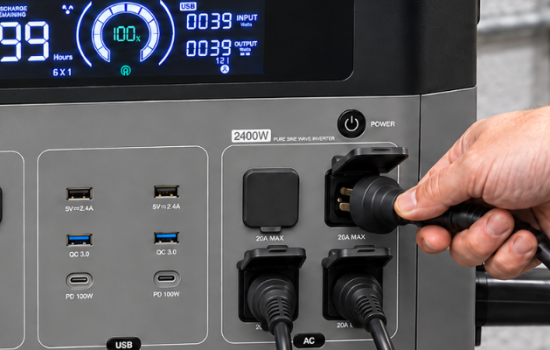
As wildfire smoke spreads and darkens the sky overhead, it may be time to re-evaluate your facility’s backup power strategy. Prepare for both planned and unplanned outages by investing in a reliable backup power system that can support critical operations, including manufacturing equipment and CNC machines, data centers, network infrastructure, telecommunications systems, and other essential loads.
The team at EverSafe can help evaluate your critical loads, runtime requirements, and facility needs to identify a properly sized UPS solution for your business. By planning ahead, organizations can be better prepared to maintain operations when wildfire conditions, smoke, or utility shutoffs place additional pressure on the electrical grid. Contact us today for a no-obligation backup power assessment.