The American Association for Accreditation of Ambulatory Surgery Facilities (AAAASF), established in 1984, grants certification to surgery centers demonstrating safe, compliant operations.
What Are the Requirements for AAAASF Certification?
AAAASF regularly updates its standards and conducts site visits to confirm quality patient care. To gain accreditation, a surgery center must:
- Provide sufficient backup power for both the operating and recovery rooms.
- Be fully equipped for surgical procedures.
- Employ board-certified surgeons with hospital privileges.
- Include an anesthesiologist capable of administering deeper levels of anesthesia.
- Maintain clean, safe surgical environments.
- Document and review procedural data.
- Pass comprehensive initial inspections and meet all standards.
- Complete annual self-assessments and triennial inspections by surveyors.
- Display the accreditation certificate prominently.
What Are the Backup Power Requirements for AAAASF Certification?
According to the AAAASF Standards Manual and Checklist V15.1 (Section 200.80), centers classified under B, C-M, or C must have:
A system that activates and supplies adequate power to the surgical suite within 30 seconds of main power failure.
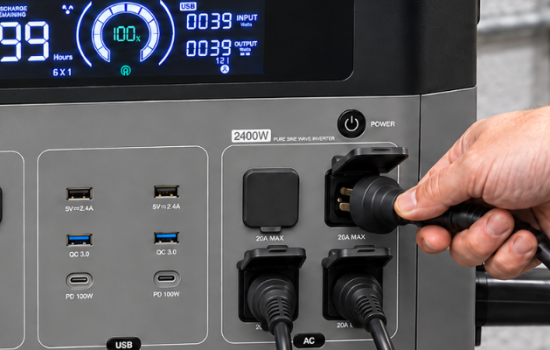
An emergency power source—such as a generator or battery—that can operate vital equipment (e.g., monitors, anesthesia machines, lights) in the operating and recovery rooms for at least 2 hours.
How Does a Battery Backup System Meet AAAASF Requirements?
EverSafe can design a custom-built battery backup system that delivers a precise 2 hours of power configured to your specifications. With internal transfer switches operating in mere milliseconds, our systems meet all applicable AAAASF mandates and provide a fully compliant solution for your backup power needs.
The AAAASF Certification Process
To achieve AAAASF accreditation, centers must submit a detailed application packet for review. Once approved, a surveyor visit is scheduled, followed by a review by the accreditation committee. Upon final approval, the facility will receive confirmation of accreditation—typically within 3 to 5 months of initial submission.