In the past, losing power meant something had gone wrong. It could be that a storm knocked down a line, equipment failed, or demand overwhelmed the grid. Today, in California, Nevada and across parts of the United States, power is being shut off on purpose.
Utilities are increasingly turning to what’s known as Public Safety Power Shutoffs (PSPS), or in the case of NV Energy, the Public Safety Outage Management (PSOM) program. These are planned outages designed to prevent catastrophic wildfires sparked by electrical infrastructure. When high winds, dry conditions, and vulnerable terrain align, the safest option for the utility is to cut power altogether.
Furthermore, these measures are increasingly implemented to limit the legal liability of the utility. In states like Nevada and California, utilities face massive litigation risks if their equipment is tied to a fire, even during extreme weather events. To mitigate this exposure, they are proactively pulling the plug.
A Fundamental Shift
For communities and businesses, this represents a fundamental shift. Power is no longer something you can assume will always be there, even if your local infrastructure is in good repair.
While California was the epicenter of this change, Nevada has become a focal point. Following devastating regional wildfires, Nevada utilities now routinely monitor “High Fire Risk Areas” and shuts off electricity during high-risk wind events. Entire regions can go dark, sometimes for hours, sometimes for days. What began as an emergency measure has evolved into standard operating procedure.
And Nevada and California are not alone. States like Colorado, Oregon, Washington, and even Hawaii are adopting similar strategies. As wildfire risk expands geographically, so does the practice of preemptive shutdowns. What was once a regional phenomenon is becoming part of a broader national reality.
Implications for Business
The implications are significant. These are not unexpected outages caused by mechanical failure. They are intentional, weather-driven interruptions. They can be forecasted, but they cannot be avoided. For businesses that rely on continuous operations, that distinction matters.
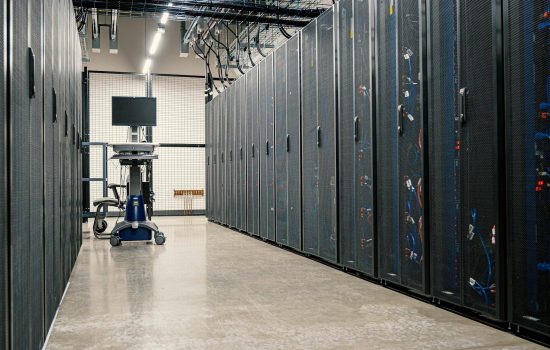
Consider environments where uptime is critical: healthcare facilities, pharmacies, manufacturing operations, and data centers. A planned public safety outage can mean halted production, lost inventory, or compromised medical systems. And unlike traditional outages, these events often last much longer; power is only restored after the wind stops and crews have manually inspected every mile of line for debris or damage.
“…unlike traditional outages, these events often last much longer; power is only restored after the wind stops and crews have manually inspected every mile of line for debris or damage.”
This is where resilience is being redefined.
Modern Solutions
Historically, backup power was seen as a contingency. Something you relied on only when things went wrong. Today, it’s becoming part of normal operations. Organizations are beginning to plan not just for unexpected failures, but for expected interruptions.
Battery backup systems, in particular, are playing a growing role in this shift. Unlike traditional generators, which may take time to “cycle up” and require volatile fuel storage, battery systems provide immediate, zero-latency power the moment the grid goes down. They bridge the gap seamlessly, whether for minutes or days, ensuring that critical medical and data systems continue running without even a “blink” in power.
The New Reality
The broader takeaway is simple: the grid is changing. Between extreme weather, aging infrastructure, and new legal risk management strategies, reliability is no longer just about preventing outages. It’s about managing them.
Public Safety Power Shutoffs are a clear signal of that change. They reflect a new reality where power may be intentionally interrupted in the name of safety and corporate liability. For businesses, the question is no longer whether outages will happen. It’s whether they’re prepared when they do.
EverSafe Power helps ensure your operations stay online—no matter what the grid does. To find out if a battery backup system is the right solution for your business, contact us today and get a free, no obligations consultation with one of our experts. Call 1-800-765-3237 or fill out this form today.