When it comes to selecting the best backup power system for emergencies, the decision often comes down to battery-based solutions or traditional gas-powered generators. Each type has its advantages and drawbacks, depending on the situation. This article will help you understand the key differences so you can make the right choice for your needs.
Let’s explore the pros and cons of both gas-powered and battery backup systems.
GAS & DIESEL GENERATORS
Gas and diesel-powered generators are widely used for emergency backup power across various industries and homes. These systems work by converting fuel into electricity through an engine, similar to how a car engine works. They’re often chosen for their capacity to run large systems and extended runtimes—ideal for powering entire facilities or homes during extended outages.

However, they come with significant downsides:
- Noise – They’re typically loud, which can be disruptive.
- Emissions – They produce carbon monoxide and other pollutants.
- Fuel Storage – Storing gasoline or diesel can be dangerous and requires space.
- Maintenance – Like any engine, they need regular maintenance and testing.
- Startup Time – There’s a delay between power loss and generator startup, which can last several seconds.

Also, fuel supply during emergencies (like hurricanes or snowstorms) can be limited, leading to potential downtime. Despite these challenges, they remain a reliable option where high-capacity and extended operation are critical.
PROS AND CONS OF GAS GENERATORS
| PROS | CONS |
|---|---|
| Can support large systems | Emits noise and harmful gases |
| Long run times | Needs regular refueling |
| Available in different sizes | Needs ongoing maintenance |
| Powerful | Delayed startup time |
| Widely available | Requires fuel storage, which can be risky and space-consuming |
BATTERY BACKUP SYSTEMS
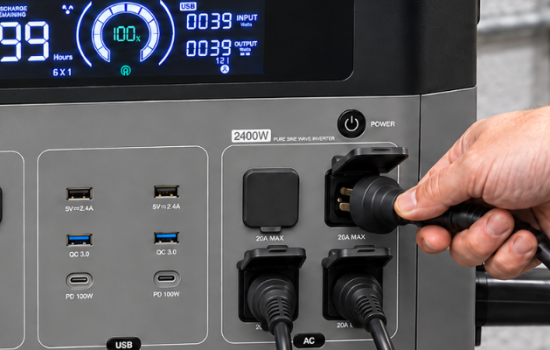
Unlike fuel-based generators, battery backup systems provide electricity instantly when a power outage occurs. They store energy in batteries and supply it automatically without any delay or noise. EverSafe battery systems are ideal for powering critical medical equipment, computer systems, refrigeration units, and other essential items.

Battery backups are a clean, silent alternative to gas-powered options. Because they don’t use combustion, they don’t produce fumes and don’t require ventilation or fuel storage. They’re also easier to maintain, needing little more than occasional inspections or battery replacement after several years.
They can be installed indoors without any special ventilation requirements, making them ideal for homes, offices, clinics, or labs.

PROS AND CONS OF BATTERY GENERATORS
| PROS | CONS |
|---|---|
| Provides instant power without delay | Higher initial cost |
| Quiet and emission-free | Limited runtime based on battery capacity |
| No need to store fuel | May require additional batteries for long outages |
| Simple to install indoors | Can take time to recharge |
| Low maintenance |
CONCLUSION
Both battery backups and gas-powered generators serve important roles in emergency preparedness.
If you’re looking for quiet, maintenance-free operation with instant power restoration and no fumes, a battery-powered system like those offered by EverSafe may be the better choice.
However, if your power needs are more extensive, and runtime is your top priority—even if it means dealing with fuel and noise—a gas generator might be the more practical solution.
It ultimately comes down to your specific requirements, space availability, and the type of equipment you need to support.