Can You Combine Battery Power with a Fuel-Powered Backup?
Fuel-based and battery-based generators can complement each other, each compensating for the other’s limitations. Fuel generators have a long-established role in powering hospitals, outpatient surgery centers, and clinics, offering high output but with delayed startup times—typically between 5 to 10 minutes, and sometimes up to 15 minutes for older systems. In healthcare settings, this delay can be critical. For example, a 2011 winter outage in North Texas knocked out power at about 20 hospitals. The lag in generator startup nearly disrupted open-heart surgeries, and caused millions of dollars in equipment damage—though fortunately, no fatalities occurred.
In contrast, battery generators provide instant power—activating in milliseconds via internal transfer switches—keeping vital equipment running seamlessly during outages.
Can Battery Systems Serve as a “Bridge” to Fuel Generators?
Yes—battery generators often act as interim power, supplying critical loads immediately while fuel-based systems begin running. This bridging approach ensures continuous operation during the startup lag of traditional generators.
In many hospitals, ambulatory surgery centers, and outpatient facilities, battery backup systems are widely used to meet accreditation standards.
Under NFPA 99, backup systems must engage within 10 seconds, whereas many medical devices require even faster protection—reducing risk where fuel generators fall short.
A battery solution can:
- Seamlessly integrate with your electrical infrastructure
- Activate in fractions of a second
- Support essential equipment for the necessary duration, whether just seconds or several minutes
- Help fulfill regulatory and accreditation expectations
Which Battery Backup Configuration Works Best as a Bridge?
Choosing the right battery solution depends on your facility’s layout and usage patterns. Here are typical models:
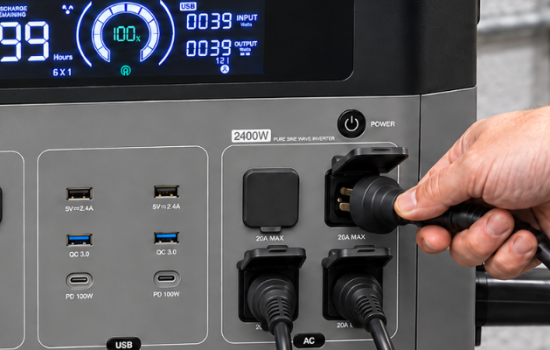
- Standalone: Plug-and-play units are ideal for equipment rooms where users simply plug devices into cabinet outlets. No electrician required, and they can be reinstalled with ease when moving or reconfiguring spaces.
- Hardwired: These systems integrate directly into your electrical panel via professional installation—best for powering multiple devices across different areas.
- Type 1 EES Systems: Enhanced hardwired versions designed for Medicare-qualifying facilities. They include fail-safe relays and redundancy to support the most critical circuits.
- Mobile: Flexible, cart-mounted units that can be moved across the facility—ideal for delivering power wherever it’s needed without assembly or electrician help.