Why Is Backup Power Essential?
A common question is: why invest in backup power? The answer is clear—it protects what matters. Backup generators preserve vital medical supplies, help clinics maintain accreditation, and safeguard patient well-being during outages. One of the greatest advantages is cost savings. Power interruptions during emergencies can be very expensive, but having a backup plan helps prevent that. A reliable system keeps the clinic operating seamlessly, protecting patient safety and preventing medicines and vaccines from spoiling due to loss of refrigeration. In essence, backup power sustains operations safely and saves money over time.
How Backup Power Helps Healthcare Facilities Cut Costs
Battery backup power serves as a safeguard for critical environments such as:
- Pharmacies
- University health centers
- Government-funded health clinics
- Doctor’s offices
- Veterans’ hospitals
These systems preserve essential items like:
- Vaccines
- Cancer treatments
- Lab specimens
- Research samples
- Other high-value medications
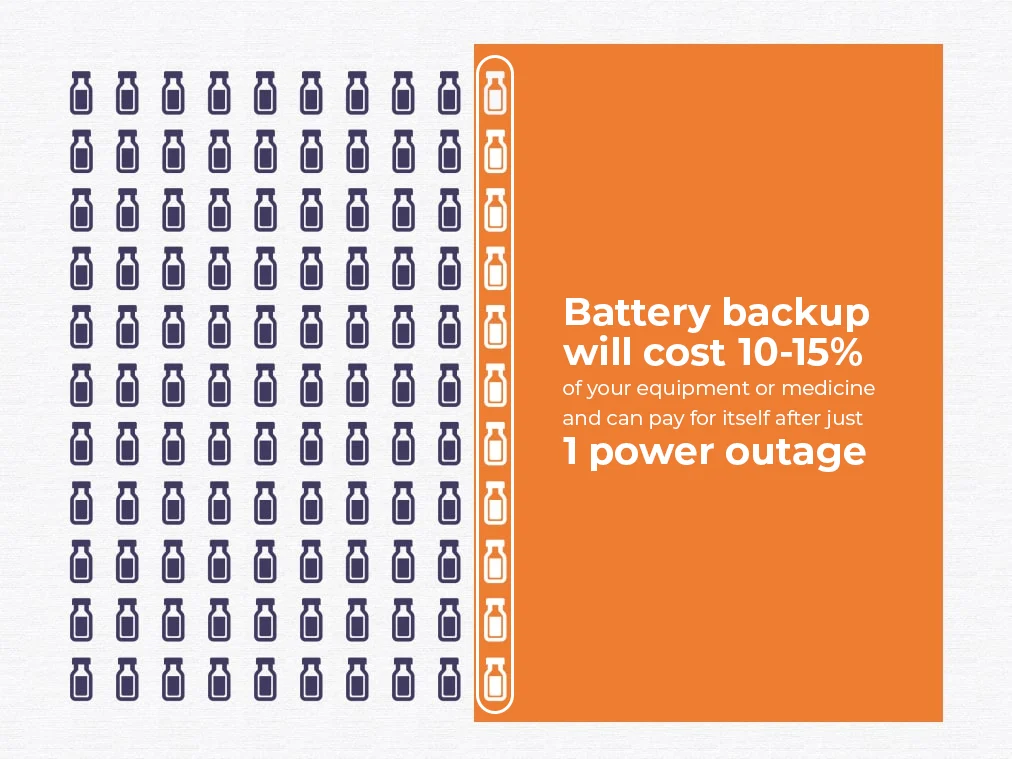
If an outage occurs, a battery backup system ensures these items remain cold and safe. For instance, a single common vaccine can cost over $250 per dose, and a small refrigerator holding 100–400 doses could contain $25,000 to $100,000 worth of vaccines. Losing that to spoilage would be far more expensive than investing in a backup system. Even without an outage, backup systems are invaluable—they prevent staff from scrambling or waiting for power restoration, keeping medical operations efficient and patient care prioritized.
Is Backup Power Worth It for Surgery Centers?
When choosing backup power for surgical centers, the stakes are even higher. Patient safety is a critical responsibility, and failure can have serious ethical and legal consequences. According to the Journal of the American Medical Association (JAMA), the average medical malpractice payout is $329,565. In certain specialties, this amount is significantly higher:
- Pathology: $473,957
- Neurosurgery: $469,222
- Gastroenterology: $390,538
Some specialties also face more catastrophic claims:
- Neuroscience: 13%
- Obstetrics/Gynecology: 12.4%
- Neurology: 11.8%
- Pediatrics: 10%
- Pathology: 10%
- Anesthesiology: 10%
Though battery backup systems cost far less than one million dollars, they offer tremendous value. They’re user-friendly, dependable, and provide immediate power to vital surgical equipment. Custom battery backup systems from EverSafe deliver peace of mind, ensuring smooth operations in demanding medical environments.