VFC providers must follow specific guidelines and responsibilities when it comes to the storage and handling of vaccines. Meeting these requirements involves having the right equipment, adhering to state regulations, and maintaining strict temperature monitoring. Failure to comply can result in the loss of vaccines worth millions of dollars.
Storage Units
According to New York State regulations, as of January 1, 2020, VFC providers must use stand-alone refrigerators and freezers designed solely for vaccine storage. Freezers must maintain temperatures between –58 °F and +5 °F (–50 °C to –15 °C), while refrigerators must hold steady between 35 °F and 46 °F (2 °C to 8 °C).
General Vaccine Storage Unit Recommendations
- Maintain proper temperatures at all times:
- Refrigerators: 35 °F to 46 °F (2 °C to 8 °C)
- Freezers: –58 °F to +5 °F (–50 °C to –15 °C)
- Prefer frost-free or auto-defrost units. If a manual-defrost freezer is used, it must be defrosted regularly according to the manufacturer’s guidance. If ice exceeds 2 inches, it must be cleared, as buildup can compromise consistent temperatures.
- Provide adequate space to hold the year’s largest inventory without overcrowding. Always leave room around items for proper air circulation.
- Use water bottles in refrigerators and frozen coolant packs in freezers to help stabilize internal temperatures and reduce fluctuations that could damage vaccine potency.
- Install calibrated thermometers in each storage unit, accompanied by a current Certificate of Calibration and Traceability.
- Ensure year-round reliability of equipment in maintaining the required vaccine storage temperatures.
- Dedicate each unit solely to vaccine storage. Food and beverages should never be kept in these refrigerators or freezers.
- Check door seals to confirm they close tightly and leave no gaps. Units with compromised seals must be repaired or replaced.
Temperature Monitoring and Data Loggers
The CDC mandates that all VFC providers use continuous temperature monitoring devices inside each storage unit. These devices must:
- Show the current temperature, visible from outside the unit.
- Record data at 15-minute intervals, with a memory capacity of at least 4,000 readings.
- Provide a method for downloading data for records.
- Maintain accuracy within ±1 °F.
- Include a backup calibrated monitoring device in case the primary fails.
Unit Sizing
The size of your practice impacts the equipment required. Capacity is based on the number of doses administered annually:
| Office Size | Required Equipment |
|---|---|
| Low Volume – less than 500 doses/year | Pharmaceutical-grade or biologic-grade refrigerator/freezer units |
| Very High Volume – 10,000 doses/year | Pharmaceutical-grade or biologic-grade refrigerator/freezer units and stand-alone freezers |
| High Volume – 2,000–10,000 doses/year | Stand-alone refrigerator (10.7 cubic feet minimum) and stand-alone freezer units |
| Medium Volume – 2,000 doses/year | Stand-alone refrigerator (10.7 cubic feet minimum) and stand-alone freezer OR pharmaceutical-grade/biologic-grade under-counter units |
Backup Power
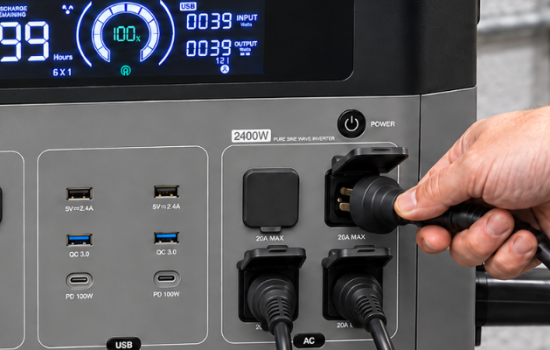
A power outage can lead to the loss of thousands of dollars’ worth of vaccines. This risk can be prevented by installing a battery backup system to support vaccine refrigerators and freezers. A properly sized system—capable of running 10,000 doses or more—can safeguard up to 55,000 doses.
With vaccines averaging about $150 per dose in the United States, backup power is a small investment compared to the cost of replacement. Refrigerators can be protected by either a full-powered generator or an EverSafe battery backup system.
Learn More About Battery Backup Power
To answer even more of your questions and find additional solutions to problems that could affect your medical facility or laboratory, check out these other articles from the EverSafe blog and the EverSafe Learning Center