What is Electrical Circuit Protection?
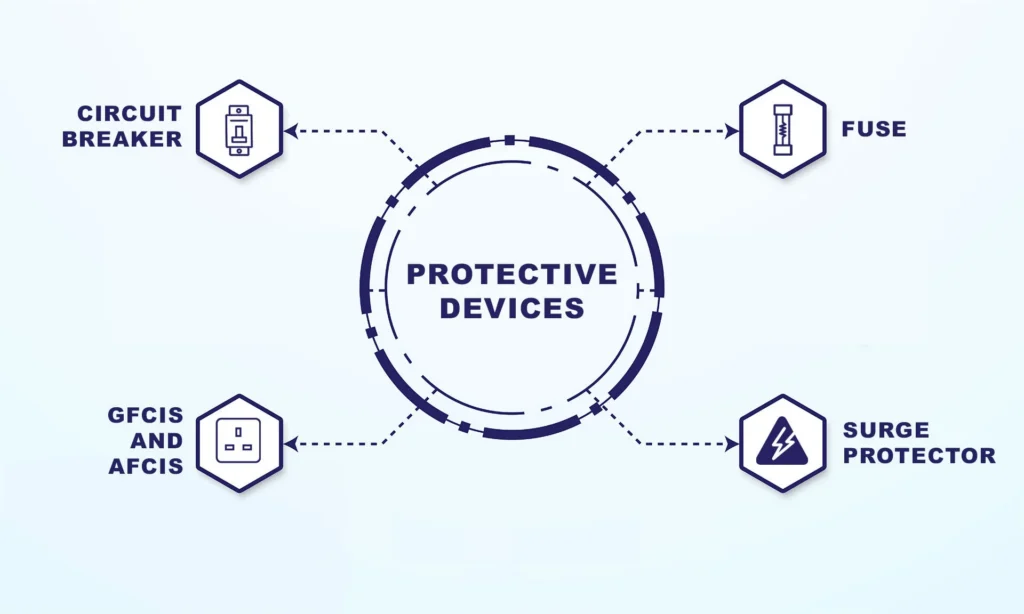
Electrical circuit protection safeguards systems from failure by preventing hazards like power surges, overcurrents, and faults. Think of it as a safety net that protects equipment, minimizes downtime, and ensures user safety. Common protective devices include:
- Circuit Breakers
- Fuses
- Surge Protectors
- Ground Fault Circuit Interrupters (GFCIs)
Why is Circuit Protection Important?
- Prevents Electrical Fires
Overloads or short circuits can produce heat sufficient to cause fires. Protective devices shut down the current before it reaches dangerous levels. - Protects Sensitive Devices
Modern electronics are vulnerable to voltage fluctuations. Proper protection prevents damage from power surges and spikes. - Ensures User Safety
Devices like GFCIs detect electrical imbalances and shut down power to prevent shocks, particularly in wet locations. - Reduces Downtime
Circuit protection minimizes disruptions caused by electrical failures, ensuring smooth operations.
Essential Components
- Circuit Breakers
Automatically interrupt the current when it exceeds safe limits. They are reusable and widely used in residential, commercial, and industrial settings. - Fuses
Cost-effective devices that melt when current exceeds a certain threshold, protecting smaller circuits. - Surge Protectors
Shield systems from voltage spikes caused by lightning or grid fluctuations, crucial for sensitive equipment. - GFCIs and AFCIs
- GFCIs: Prevent shocks in damp areas like bathrooms and kitchens.
- AFCIs: Detect and mitigate electrical arcs, reducing fire risk.
Applications of Electrical Circuit Protection
- Residential Settings
- Surge Protectors: Protect appliances like TVs and refrigerators.
- GFCIs: Ensure safety in kitchens, bathrooms, and outdoor spaces.
- Commercial Facilities
- Data Centers: Prevent voltage fluctuations that can damage servers.
- Retail Stores: Protect point-of-sale systems and security equipment.
- Industrial Facilities
- Heavy Machinery: Safeguard motors and equipment from overloads.
- Automation Systems: Protect control panels during power surges.
- Renewable Energy Systems
- Solar Panels: Circuit breakers and surge protectors ensure system safety.
- Wind Turbines: Protect circuits from overcurrent and environmental factors.
Best Practices for Effective Circuit Protection
- Regular Inspections: Periodically check protective devices for wear and replace or test as needed.
- Appropriate Selection: Choose devices suited to your system’s voltage, current capacity, and environment.
- Surge Protector Installation: Use surge protectors for critical systems, especially in areas prone to lightning or unstable grids.
- Professional Services: Rely on licensed electricians for installation and maintenance to ensure safety and reliability.
Emerging Trends in Circuit Protection
- Smart Protection
IoT-enabled devices provide remote monitoring, control, and real-time performance data. - Eco-Friendly Designs
New devices are built with recyclable materials to minimize environmental impact. - Renewable Energy Integration
Protective solutions tailored for solar and wind systems address challenges like power variability.
Choosing the Right Circuit Protection
When selecting protective devices, consider:
- Voltage and Current Requirements: Ensure compatibility with your system.
- Environmental Conditions: Choose weatherproof options for outdoor or industrial use.
- Budget and Maintenance: Balance initial costs with long-term reliability.
Final Thoughts
Circuit protection is essential for maintaining safe, reliable, and efficient electrical systems. By implementing the right measures, you can prevent costly damages, ensure user safety, and support uninterrupted operations. Investing in proper circuit protection is a proactive step toward securing your infrastructure and peace of mind.