Are You Dependent on the Power Grid?
Imagine a day just like any other—you’re contributing to essential services that keep society running smoothly and people healthy and safe. Whether you’re running a small office-based surgery center, managing a large ambulatory surgery network, overseeing a blood draw lab, or conducting biomedical or forensic research, many elements of your environment aid your work—and power is a critical one that’s often beyond your control.
Electricity quietly underpins life-saving, complex tasks—powering momentous medical and technological advances and enabling researchers and professionals to collaborate globally, across time zones, with speed and reliability.
You Could Be at Risk
Yet in an instant, everything can change. A power outage leaves life-critical refrigeration units for vaccines or pharmaceutical supplies inactive, putting valuable inventory at risk. For patients in surgery or awaiting routine procedures, a sudden blackout can turn into a serious hazard.
According to the U.S. Energy Information Administration, in 2020 the average U.S. outage per customer lasted just over 8 hours—more than double the roughly 3.5-hour annual average recorded in 2013.
Reliable Power is a Necessity
This surge in outage duration largely reflects the growing frequency of intense weather events—not an anomaly. It’s not a question of if, but when your facility will experience a power loss—and for how long.
While backup power is mandatory in many areas—such as ORs and procedure rooms—other spaces, though not required, can greatly benefit from emergency power. For example, an indoor generator can safeguard critical, costly vaccine reserves that protect infants, children, and broader communities from preventable diseases. Properly planned backup systems also shield invaluable biomedical research from temperature-related damage.
The Benefits Outweigh the Cost
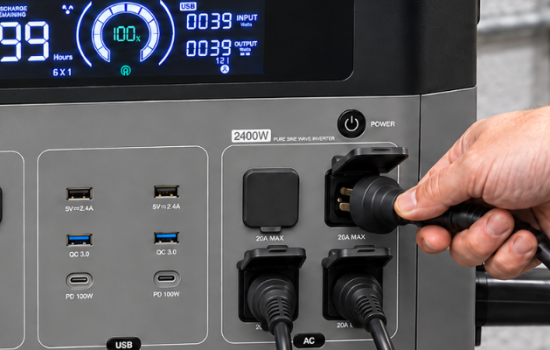
Even in mission-critical spaces like operating theaters, outdated power solutions—or generators that take time to reach operational capacity—can leave gaps in protection. Modern battery systems offer instantaneously available power, delivering both dependability and peace of mind.
Investing in continuous facility operation pays off—not just in safeguarding inventory and reputation, but in building trust. It reassures every staff member and patient that your facility is a secure, dependable place of care.
EverSafe supports your backup power needs—explore our Learning Center for guidance on cost, performance, regulation, and practical advice for selecting and implementing backup systems.